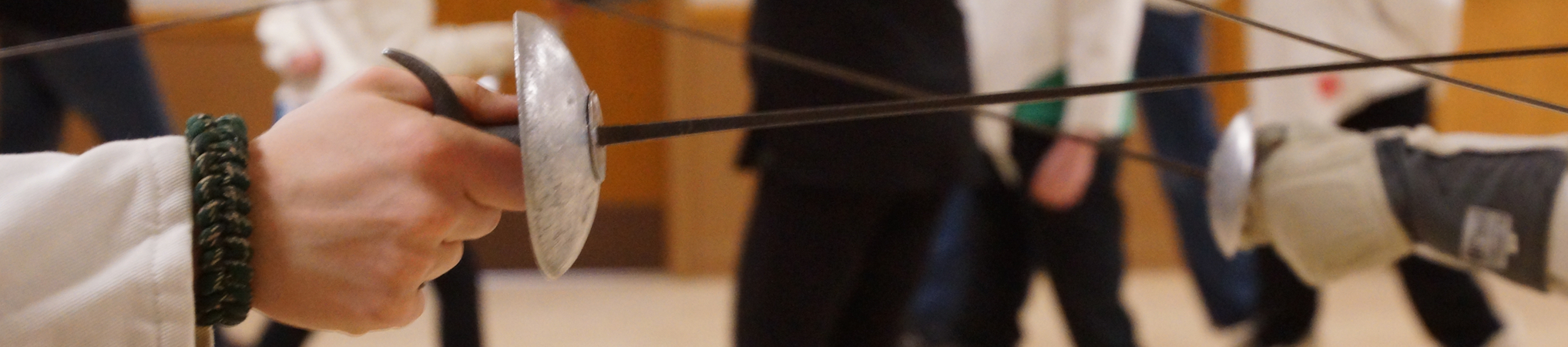
Close up of the hand of a PHS student holdidng an epee during Fencing class
 

Community Expectations

Basic Obligations

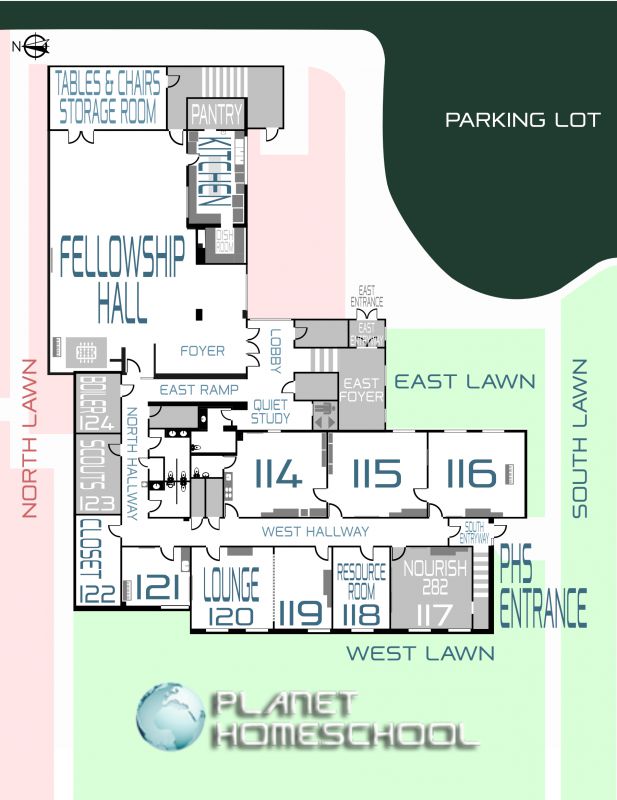
Planet Homeschool Floor PlanWhere to be:

As indicated in our lease, PHS has use of the following spaces:

  • The south door to enter and exit the building.

  • First-floor classrooms (114, 115, 116, 119, 121), lounge (120), restrooms, Fellowship Hall, and hallways.

  • The picnic tables, parking lot, and the east/west/south lawns.

  • The Fellowship Hall Lobby may be used for quiet studying/co-working only, as voices carry upstairs where others are working.

  • The Resource Room (118) may be used for studying/co-working, provided an adult co-op member or instructor is also in the room at all times.

  • Unscheduled classrooms may be used by those needing a quiet place to take a break from the hubbub of our classrooms and shared spaces; provided the door remains open or an adult co-op member or instructor is also in the room at all times.

PHS MAY NOT use these spaces:

  • The east door, with the exception of instructors bringing supplies and equipment in and out. 

  • The north door.

  • The elevatorexcept if needed as a disability entrance.

  • The stairs by the Fellowship Hall lobby.

  • The stairs by the south door entryway.

  • Any part of the upper floor.

  • The north lawn (along 33rd Avenue).


How to behave:

Treat each other, our community, and our space with respect.

Keep behavior, language, and conversation topics appropriate for a public place.

If your class ends early or you have a free period, please be mindful of other classes and keep hallway noise to a minimum.


Where to eat lunch:

Food is allowed only in the Fellowship Hall, outdoors, or (when absolutely necessary) in the hallway outside the lounge near the Onsite Volunteer Station.

Spilled food must be cleaned up immediately.


Clean up after yourself and keep the spaces clean.

PHS is its own janitor. The church’s weekend events depend on us leaving the space as clean as we found it and putting furniture back in place. We will incur a fee if church staff need to clean up after us.


Pitch in.

Students and Onsite Volunteers are expected to take charge of morning setup, classroom transitions, setup for lunch, cleanup after lunch, and cleanup at the end of the day.

Setup: Students should plan to arrive 15-20 minutes before classes begin to help with the setup of classrooms and shared spaces.

Classroom Transitions: At the end of each class period please: clean spills, pick up trash, help rearrange tables and chairs if needed, and ensure the classroom is in good condition for the next class.

Lunch: Help clean up the Fellowship Hall after lunch by wiping down tables and chairs, and cleaning up any food spills on the floor.

Cleanup: Students should plan to stay at least 15 minutes after class ends, or later on particularly messy days, to help with the cleanup of classrooms and shared spaces. Students should check in with the Onsite Volunteers to see what needs to be done. When everyone participates, cleanup can be completed in about 15 minutes.


Be informed:

Keep up with announcements and co-op communications. These are primarily posted to our member forums and chats.

Familiarize yourself with our membership policies:

  1. Community Expectations

  2. Mission and Purpose

  3. Volunteer Commitment Overview

  4. Communicable Illnesses Policy

  5. Allergies and Sensitivities Policy

  6. Inclement Weather Policy

  7. Refund Policy

  8. Tuition & Fees

The Leadership Team may choose to amend policies for the well-being of the community. Members will be informed of any revisions.


Ask for help!

Let the Onsite Volunteers know if you need help with anything while you’re at PHS.


Values in Action

Our community functions best when we show kindness and respect to both ourselves and each other. All of PHS is a shared space, and we must work together to ensure it is a welcoming and safe space for everyone. With that in mind, all community members agree to treat ourselves, others, and our rented space considerately and in keeping with the guidelines below.

While in our shared space at PHS, we agree to refrain from:

  • Name-calling, jokes, or slurs that put down or threaten individuals or groups of people, including lesbian, gay, bisexual, and transgender people, people of color, people of particular genders, people of particular faiths or ethnic backgrounds, and people with disabilities.

  • Profanity/swearing.

  • R-rated, NSFW-type conversations about sex or violence.

  • Forcing unwanted physical contact on others, touching others without consent, or pressuring others for touch of any kind.

  • Harassing or unkind comments about others’ bodies, appearances, or abilities.

  • Behaviors that physically endanger or threaten to endanger anyone.

  • Damaging the space we rent from Faith United Methodist Church.

  • Displays of affection more suited to a private place than a shared space.

  • We also agree not to harass or bully other PHS members on social media, in online chat forums, or through direct messages or emails.

    • Please do not post to the co-op forum if you have a conflict with or concern about a PHS student, instructor, volunteer, or parent/guardian that you are unable to resolve between yourselves. Email our co-op’s Leadership Team directly at PlanetHomeschoolMN@gmail.com.

Some classes involve talking about violence, racism, sexism, religious intolerance, and other emotionally charged topics. Students and instructors agree to be sensitive and thoughtful when discussing these topics.

For Students

Please speak up if something bothers you or makes you feel unsafe/uncomfortable at PHS.

Examples:

  • “Your music is too loud for me. Would you please turn it down or use headphones?”

  • “Please don’t tell jokes like that around me.”

  • “Please take two steps back. I’m not comfortable having someone stand this close to me.”

If talking to the person doesn’t resolve the issue, or if you don’t feel safe addressing a problem directly, ask for help from a PHS adult - this can be an Onsite Volunteer, instructor, or any parent/guardian who is present.

If a community member speaks to you about modifying your behavior, do your best to respond courteously to the request. Please change your behavior as needed, or ask for help/clarification if you’re not sure what to do. PHS adults will help if needed.


For Onsite Volunteers

Student behavioral issues are rare at PHS, and most Onsite Volunteer shifts go smoothly and uneventfully.

Respond to problems and requests for help by:

  1. Using short, simple statements about what change you are requesting and how the behavior is affecting others. Examples:

    • “Please lower your voices or take your conversation outside as your voices can be heard in the classroom across the hall.”

    • “Please don’t tell jokes based on stereotypes here. They can make people feel unsafe and unwelcome.”

  2. Asking everyone involved in a conflict these questions:

    • “What happened? or, “What’s happening?”

    • “What were you thinking about while this was happening?”

    • “What does everyone in this situation need right now?”

    • “What needs to happen so everyone’s needs and boundaries are respected?”

Onsite Volunteers should do their best to approach students with compassion, generosity, and kindness and with the understanding that students may not be able to answer these questions when they are stressed or upset. They may need time and support to understand what’s being asked of them.

If needed, Onsite Volunteers may call students’ parents/guardians for help and guidance in addressing a situation. Contact information can be found in our Member Directory (a printed copy is kept in the Onsite Volunteer File Box).

You may also seek help from the other PHS adults present.

Please inform a Leadership Team Member of any conflicts or behavior problems during your volunteer shift, so they can be aware of what happened and keep watch for patterns. 


For Parents/Guardians

Families are central to helping students prevent conflict and navigate conflict resolution.

Families should:

  • Keep in mind that all PHS volunteers are just other parents/guardians volunteering to the best of their ability.

  • Understand that no one at PHS has the role of a principal or school counselor, and Leadership Team members at PHS have limited power to solve problems that are best worked out by the people most directly involved.

  • Be willing to contact other PHS members directly and participate in conversations with compassion, generosity, and respect.

  • Remind your students that they are empowered to speak up in a respectful way and to set healthy boundaries.

  • Remind students they are always welcome to ask the Onsite Volunteers and instructors for help.

  • Ensure your students know the expectations for behavior, including treating other students, instructors, volunteers, and others respectfully.

  • Ensure your students understand that they are responsible for setup, cleanup, and transitions for our classrooms and shared spaces.

  • Ensure your students are aware that they should listen to and work with other students, instructors, Onsite Volunteers, and other adults.

  • Coach your students with strategies for coping with challenges they might face at PHS and make sure they understand what’s expected of them in a group learning environment.

  • Consider whether your students can resolve particular issues on their own or if they need help from you.

  • If your student is facing challenges (such as sensory issues, impulse control issues, anxiety, auditory processing, or difficulties reading social cues), contact your student’s instructors before the first day of class to let them know the best ways of working with your student while at PHS.

    • It is also helpful to let Leadership Team know about your student's needs. 

  • Commit to following through on the conflict resolution process with your student, pulling in others when necessary, until resolution is achieved.

  • Remain at PHS with your student while a conflict is being resolved or if the Leadership Team or instructors request it.


For Instructors

You may set additional policies regarding classroom behavior for your own classes.


Conflict Resolution Steps

  1. Person-to-person conversation between the people directly involved.

  2. If needed, request assistance from an instructor or Onsite Volunteer.

  3. If needed, have a follow-up conversation among the people involved, including the students’ parents/guardians.

  4. If needed, contact the Member Liaison to request a restorative circle time with a trained volunteer; participants agree to abide by the resolution reached through the restorative circle process.

Our community’s goal is to resolve disagreements and offer each other a chance to learn from mistakes. However, the community members involved may decide that a parent/guardian should stay onsite with a student during classes and/or free periods. In rare instances, the healthiest course of action may be for a student or family to leave PHS.

Restorative Circle Process

When additional help is needed to find ways to address a problem in a mutually acceptable manner, directly involved families and instructors may be invited to participate in a restorative circle facilitated by a trained volunteer. Families may ask to invite a small number of other community members to the circle to provide other perspectives and share fresh ideas for coming to a mutually acceptable resolution.

This process is designed to bring healing and understanding, empowering everyone involved to develop a mutually acceptable strategy to address the particular situation and any underlying problems that may have led to the conflict. In reaching these goals, the circle process builds on the values of respect, honesty, listening, truth, and sharing. Everyone present will have a voice in the process, speaking as a talking piece is passed around the circle.


To Top